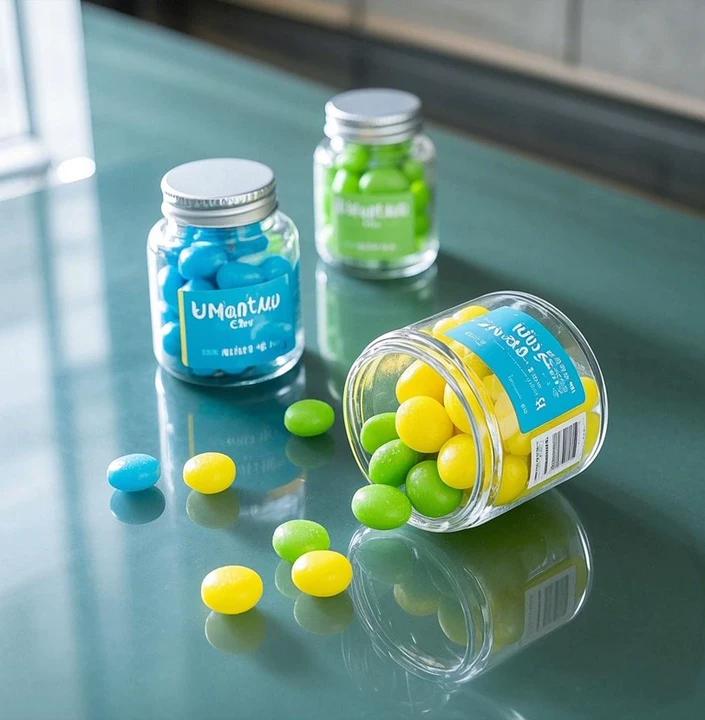
When you are building or expanding a supplement brand, one of the earliest — and most consequential — decisions you will make is the dosage form. Should you launch with hard-shell capsules, softgels, gummies, or tablets? The choice shapes your cost structure, your manufacturing lead time, your labeling claims, and, most importantly, how easily your …

When you are building or expanding a supplement brand, one of the earliest — and most consequential — decisions you will make is the dosage form. Should you launch with hard-shell capsules, softgels, gummies, or tablets? The choice shapes your cost structure, your manufacturing lead time, your labeling claims, and, most importantly, how easily your customers will actually take the product every day.
At Zuoning Bio we manufacture all four formats for overseas private-label and contract-manufacturing clients, and we see the same questions come up again and again. This guide walks through the practical trade-offs so you can choose with confidence rather than guesswork.
1. Hard Capsules
Hard capsules (typically HPMC vegetarian or gelatin) are the workhorse of the supplement industry — and for good reason.
- Flexibility: You can fill powders, granules, and even pellets or beads. This makes them ideal for blends, probiotics (with the right handling), and ingredients that do not compress well.
- Speed to market: Tooling is minimal and changeovers are fast, which keeps minimum order quantities (MOQs) and lead times lower than most other formats.
- Tolerability: Many consumers associate capsules with “clean” delivery, and they are easy to swallow for most people.
Limitations: Capsules are less suitable for very high-dose single ingredients (you may need multiple capsules), and they offer limited protection for moisture-sensitive actives unless you invest in desiccant packaging.
Best for: powder blends, multivitamins, herbal formulas, probiotics, and brands that want low MOQ and fast turnaround.
2. Softgels
Softgels enclose liquid or semi-liquid fills in a seamless gelatin or vegan shell. They are the format of choice for oils.
- Absorption: Liquid fills are often absorbed more efficiently than powders, which is why fish oil, CoQ10, and vitamin D3 so often come as softgels.
- Stability: The sealed shell protects oxygen- and light-sensitive oils from degradation far better than an open capsule.
- Premium feel: The smooth, uniform appearance supports a higher price point.
Limitations: Higher tooling and setup cost, longer lead time, and stricter limits on what you can put inside (it must be a pumpable liquid or suspension). Vegan softgels are possible but add complexity.
Best for: fish/omega-3 oils, fat-soluble vitamins, CoQ10, curcumin in oil, and other lipid-based actives.
3. Gummies
Gummies have exploded in popularity, especially for repeat-purchase categories and demographics that dislike swallowing pills.
- Compliance: Customers — particularly children, seniors, and “pill-averse” adults — take gummies consistently. That drives retention.
- Brand differentiation: Flavors, shapes, and colors make gummies a marketing asset.
- Vegan options: Pectin-based (vegetarian/vegan) gummies are now mainstream and a strong selling point in Europe and North America.
Limitations: You cannot pack as much active ingredient per piece, sugar and stability must be managed carefully, and some actives (like certain probiotics or high-dose minerals) are technically difficult. Gummies also typically require higher MOQs and longer development time for a stable formula.
Best for: vitamins (C, D, B-complex), melatonin, apple-cider-vinegar, collagen (in limited doses), and lifestyle/wellness SKUs.
4. Tablets
Tablets are compressed powders and remain the lowest-cost format at scale.
- Economy: Once tooling exists, per-unit cost is the lowest of the four, and they pack high doses into a single small unit.
- Stability & shelf life: Tablets are generally robust and easy to coat for taste-masking or enteric release.
Limitations: Compression can be hard on some delicate ingredients (probiotics, enzymes), some consumers find them hard to swallow, and a poor formulation can taste chalky if chewed.
Best for: high-dose single ingredients (calcium, magnesium, iron), electrolyte tabs, and cost-driven mass-market SKUs.
How to Decide: A Practical Framework
Ask yourself four questions:
- What is the physical nature of your active? Oils → softgel. Powders/blends → capsule or tablet. Sensitive live cultures → capsule or specific tablet handling.
- What dose per serving? Very high doses favor tablets or multiple capsules; gummies cap out lower.
- Who is your customer? Pill-averse or younger audiences lean gummy; performance and clinical audiences lean capsule/tablet.
- What are your margins and MOQ tolerance? Tablets and capsules win on cost and flexibility; gummies and softgels need more upfront commitment.
A Note on Compliance
Whatever format you choose, your dosage form affects labeling and compliance. For the U.S., structure/function claims and FDA labeling rules apply regardless of format; for the EU, EFSA health-claim rules and the excipients in your format (for example, added sugars in gummies) matter; for Australia, the TGA requires specific listing depending on form and claims. Your contract manufacturer should be able to advise on format-specific compliance for your target market.
Conclusion
There is no single “best” dosage form — only the best fit for your ingredient, your customer, and your business model. The fastest path to a confident decision is to share your formula goals and target market with an experienced OEM/ODM partner early, before tooling and packaging are committed.
Ready to discuss your next product? Contact our team:
Wade@zuoningbio.com | +86 187 5469 6289 | www.zuoningbio.com