**A practical guide for international buyers sourcing probiotic supplements from Chinese manufacturers** --- If you are planning to launch a probiotic supplement line — whether for the US, European, Australian, or Southeast Asian market — you are probably already aware that probiotic OEM is far more complex than simply filling capsules with powder. Strain selection, …

**A practical guide for international buyers sourcing probiotic supplements from Chinese manufacturers**
—
If you are planning to launch a probiotic supplement line — whether for the US, European, Australian, or Southeast Asian market — you are probably already aware that probiotic OEM is far more complex than simply filling capsules with powder. Strain selection, viability maintenance through manufacturing and shelf life, and packaging choices are three interconnected challenges that can make or break your product.
At Dongying Zuoning Biotechnology (zuoningbio.com), we have helped dozens of overseas brands navigate these complexities. In this article, we share the key considerations you should bring to the table when working with a probiotic OEM partner.
## 1. Strain Selection: More Than Just “Probiotic”
The term “probiotic” covers a wide range of bacterial species and strains, each with different properties, supported research, and regulatory statuses across markets.
**Key considerations:**
– **Genus and species matter**: Look beyond marketing claims. Lactobacillus rhamnosus GG and Lactobacillus rhamnosus HN001 are well-documented strains. Generic “Lactobacillus” statements are insufficient for serious formulations.
– **Strain-specific benefits**: Different strains target different outcomes — digestive health, immune support, skin health, mood, and more. Define your product’s positioning first, then select strains accordingly.
– **Market-specific approved claims**: In the EU, EFSA has strict restrictions on health claims. In the US, structure/function claims are permitted with substantiation. In Australia (TGA), only listed medicines can make therapeutic claims. Your OEM partner should help you align strain selection with your target market’s regulatory framework.
– **Combination vs. single strain**: Multi-strain formulas are popular but require careful compatibility testing. Not all strains coexist well in the same matrix. A reputable manufacturer will test strain compatibility before production.
## 2. Viability: The Most Critical and Most Overlooked Factor
A probiotic product that contains dead or degraded bacteria at the point of consumption is essentially worthless — regardless of what the label says. Viability is the single greatest technical challenge in probiotic manufacturing.
**What affects viability:**
| Factor | Impact |
|—|—|
| Manufacturing temperature | Heat during blending or encapsulation damages sensitive strains |
| Moisture content | Excess moisture accelerates bacterial death |
| Oxygen exposure | Aerobic strains are particularly sensitive to oxidation |
| Stomach acid (in-use) | Most strains require an enteric coating or acid-resistant packaging to survive gastric transit |
| Shelf life duration | CFU counts naturally decline over time; stability testing is essential |
| Storage conditions | Temperature and humidity during shipping and consumer use |
**What a quality OEM partner should do:**
– Conduct **accelerated stability studies** (ASTM F1980) to project shelf-life CFU counts before full production
– Use **flow hoods and nitrogen flushing** during encapsulation to minimize oxygen exposure
– Apply **enteric-coated capsules** or **acid-resistant technologies** for strains sensitive to low pH
– Provide **real-time stability data** for the target shelf life (typically 24 months)
– Ensure **third-party lab testing** of finished products for total CFU at point of manufacture AND end of shelf life
> **Tip for buyers:** Always request a Certificate of Analysis (CoA) from an accredited third-party lab (such as SGS, Bureau Veritas, or equivalent) — not just in-house testing.
## 3. Packaging: Your Last Line of Defense for Viability
Even the best probiotic formulation can be compromised by inadequate packaging. The packaging does more than contain the product — it protects viability throughout the supply chain and the consumer’s shelf.
**Packaging options ranked by barrier performance:**
1. **Blister packs (aluminum-aluminum foil)** — Best barrier against moisture and oxygen. Ideal for sensitive probiotic capsules. Widely accepted in EU and US markets.
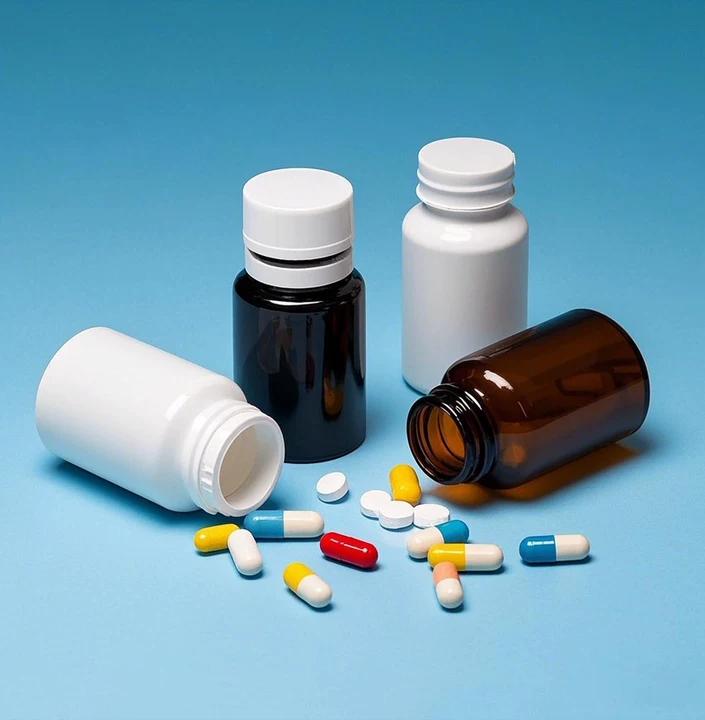
2. **Amber glass bottles with desiccant** — Good moisture barrier. Requires desiccant packets inside. Adds premium positioning.
3. **HDPE bottles with induction seals** — Standard for many supplements. Add silica gel desiccant for probiotic formulas. Ensure child-resistant caps for US retail.
4. **Stick packs / sachets** — Popular for powdered probiotic formats. Requires moisture-barrier film laminates.
5. **Softgel (for oil-based probiotic suspensions)** — Some probiotic strains can be suspended in oil, which provides a natural protective matrix and improved stability.
**Critical packaging decisions:**
– **Desiccant inclusion**: Essential for most probiotic formats. Check regulations in your target market — some EU countries restrict certain desiccant materials.
– **Child-resistant packaging**: Mandatory for US retail (16 CFR 1700).
– **Tamper-evident seals**: Required in most regulated markets.
– **Label compliance**: Your label must state the genus, species, and strain name (e.g., Lactobacillus rhamnosus GG), total CFU at time of expiry, recommended serving size, storage instructions, and net quantity. Ensure all claims comply with local regulations.
## 4. Regulatory Alignment: What You Must Have in Place
Before signing any OEM agreement, verify that your manufacturer can support your target market:
**For USA (FDA / DSHEA):**
– Dietary supplement registration not required, but GMP compliance (21 CFR 111) is mandatory
– NDI (New Dietary Ingredient) notification required if using novel strains or high concentrations
– Structure/function claims must be substantiated; disease claims are prohibited
**For EU (EFSA):**
– Novel Food regulation (EC 2015/2283) may apply to certain probiotic strains
– Health claims must be EFSA-approved; generic “probiotic” claims are not permitted without specific strain-level substantiation
– Mandatory multilingual labeling
**For Australia (TGA):**
– Probiotics may be listed on the ARTG (Australian Register of Therapeutic Goods) if making therapeutic claims
– Listed medicines require TGA-approved GMP facilities
– Evidence requirements are stringent
## 5. Finding the Right OEM Partner
Not all probiotic manufacturers have the same capabilities. Here is a practical checklist:
– [ ] Does the factory hold **GMP certification** (or equivalent)?
– [ ] Do they have experience with **your specific target market**?
– [ ] Can they provide **third-party lab testing** for every batch?
– [ ] Do they offer **stability study data** before production?
– [ ] Are they transparent about **strain sourcing** (original strains from validated culture banks)?
– [ ] Do they provide **documentation packages** (CoA, MSDS, TDS, allergen statements) ready for import clearance?
—
Probiotic OEM is a technically demanding category — but with the right manufacturing partner, you can bring a genuinely differentiated, science-backed product to market.
At **Zuoning Biotechnology**, we specialize in probiotic formulations across capsules, tablets, softgels, and powder formats. Our facilities are GMP-certified, and we support overseas brands with full documentation packages for US, EU, Australian, and global markets.
**Ready to start your probiotic OEM project?**
📧 **Wade@zuoningbio.com**
📞 **+86 187 5469 6289**
🌐 **www.zuoningbio.com**
—
*This article is for informational purposes only and does not constitute regulatory or legal advice. Compliance requirements vary by market; consult a qualified regulatory consultant for your specific product and target region.*