If you're planning to launch a probiotic supplement line, you already know it's one of the most technically demanding categories in the nutraceutical space. Unlike standard vitamins, probiotics involve live microorganisms — and every step from strain selection to final packaging determines whether your product delivers real value or ends up as a dead capsule …

If you’re planning to launch a probiotic supplement line, you already know it’s one of the most technically demanding categories in the nutraceutical space. Unlike standard vitamins, probiotics involve live microorganisms — and every step from strain selection to final packaging determines whether your product delivers real value or ends up as a dead capsule sitting on a shelf.
This guide walks you through the three critical pillars of probiotic OEM production: choosing the right strains, maintaining shelf-life viability, and selecting packaging that protects your product from factory to consumer.
—
## 1. Strain Selection: Beyond the Label
The probiotic market is flooded with products that list “10 billion CFU” on the label but deliver far less by the time the consumer opens the bottle. The root cause often lies in strain selection.
### Know Your Strain, Know Your Outcome
Not all Lactobacillus acidophilus is the same. Different strains within the same species can have vastly different clinical outcomes. When evaluating an OEM partner, ask:
- Do they work with well-documented strains? Strains like Lactobacillus rhamnosus GG, Bifidobacterium animalis BB-12, and Lactobacillus casei Shirota have decades of human clinical data behind them. These are the strains buyers trust.
- Are the strains properly identified? Modern taxonomy uses genomic identification (16S rRNA sequencing or whole-genome sequencing). A reputable manufacturer should be able to provide a Certificate of Analysis (CoA) with strain-level identification, not just genus-level.
- Do they offer proprietary blends or standardized formulations? Some manufacturers provide pre-blended probiotic complexes with clinically validated ratios. Others will work with you to custom-formulate based on your target market and health claims.
### Shelf-Stable vs. Refrigerated Strains
A major decision point: will your product require cold chain logistics, or can it be shelf-stable at room temperature?
| Strain Type | Storage Requirement | Market Fit |
|—|—|—|
| Refrigerated strains | 2-8C throughout | Premium specialty channels |
| Shelf-stable strains | Room temperature OK | Mainstream retail, e-commerce |
| Spore-forming (e.g., Bacillus coagulans) | Highly stable at ambient temps | Global export, warm climates |
For most export-oriented buyers, shelf-stable or spore-forming strains are the practical choice — they reduce logistics complexity and minimize the risk of viability loss during transit.
—
## 2. Viability: The Make-or-Break Factor
You can have the world’s best probiotic strain, but if the CFU count crashes before the expiry date, your brand takes the hit. Viability management is where good OEM manufacturers separate themselves from the rest.
### What Kills Probiotic Viability
Probiotics are sensitive. Key threats include:
- Heat — Most probiotic strains degrade above 40C
- Moisture — Water activity promotes microbial instability
- Oxygen — Many beneficial strains are strictly anaerobic or facultative anaerobic
- Acid (stomach) — Without proper encapsulation, strains die in the gastric environment
- Time — CFU counts naturally decline over the product’s shelf life; this must be accounted for in formulation
### How Manufacturers Maintain Viability
A professional probiotic OEM facility will address viability at multiple levels:
Strain-level decisions:
- Select strains with documented gastric acid tolerance
- Use clinically validated doses with a safety margin (e.g., label 15 billion CFU when the target minimum is 10 billion at expiry)
Process-level controls:
- Low-temperature drying (freeze-drying / lyophilization is the gold standard)
- Nitrogen-flushed processing environments to minimize oxygen exposure
- Short processing times to reduce heat stress
Formulation-level protection:
- Prebiotic fiber inclusion (inulin, FOS, GOS) as “food” for the probiotics
- Oil suspension formulations for soft capsules and gummies
- Moisture-control agents (silicon dioxide, microcrystalline cellulose)
### The Expiry Date Reality
Always negotiate a “guaranteed CFU at end of shelf life” clause in your OEM agreement — not just CFU at the time of manufacture. A product labeled “15 billion CFU” might only have 3 billion viable cells by month 18. For premium products, consider shorter shelf lives (18 months vs. 24 months) to ensure the consumer experience matches the label promise.
—
## 3. Packaging Requirements: Protection Is Everything
Packaging for probiotic supplements isn’t just about aesthetics — it’s the final line of defense for viability.
### Best Packaging Formats for Probiotics
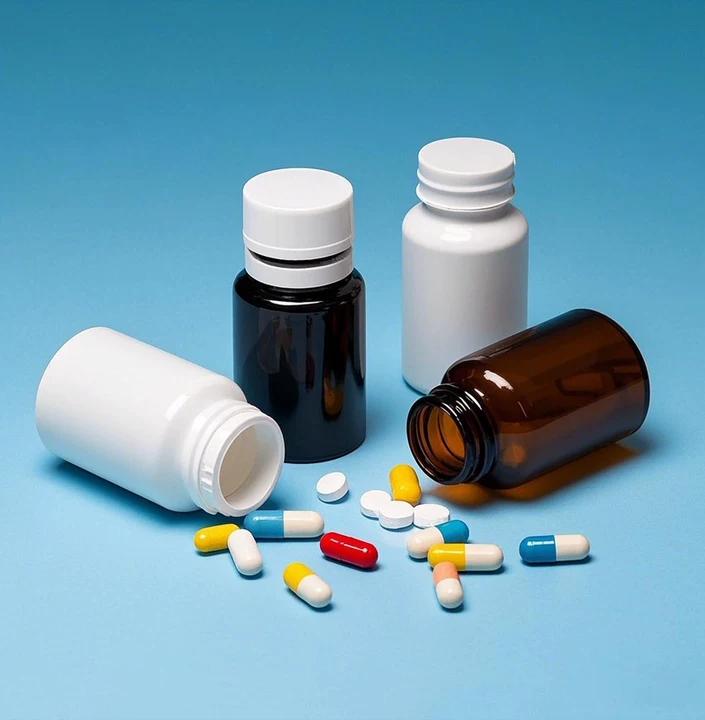
- Glass Bottles with Desiccant — Excellent oxygen and moisture barrier; preferred for high-end products; heavier for shipping; best for premium brands and refrigerated products
- Plastic Bottles (HDPE/PP) with Induction Seals — Good barrier properties with desiccant; lightweight and cost-effective; best for mainstream shelf-stable probiotics
- Blister Packs (Aluminum/Aluminum) — Superior individual capsule protection; blocks light, oxygen, and moisture; higher packaging cost but significantly extends shelf life; best for high-potency products and export markets with long transit times
- Stick Packs / Sachets (for powder formats) — Single-serve convenience; nitrogen-flushed packaging; best for pediatric probiotics and travel formats
### Key Packaging Considerations
- Desiccant inclusion: Always request silica gel desiccant canisters or packets inside the bottle — this is non-negotiable for shelf-stable probiotics
- Induction seal: A foil induction seal under the bottle cap provides an additional moisture/oxygen barrier
- Light protection: Amber glass or opaque plastic containers protect photosensitive probiotic strains
- Child-resistant closures: Required for retail compliance in the US, EU, and many other markets
—
## 4. Regulatory Compliance: The Non-Negotiable Layer
Before finalizing your probiotic OEM order, ensure your manufacturer understands the regulatory requirements for your target market:
- United States (FDA): Probiotics as dietary supplements must comply with DSHEA. Strains must be pre-DSHEA grandfathered, have a history of food use, or require NDI notification. Labels must list genus, species, and strain name. CFU count must be accurate through end of shelf life.
- European Union (EFSA): Health claims are heavily restricted. Only strains with approved EFSA health claims can legally bear them in marketing. Novel strains may require Novel Food approval.
- Australia (TGA): Listed medicines with probiotic ingredients require TGA registration. Therapeutic goods advertising rules are strictly enforced.
- China: Probiotics require registration with China’s State Administration for Market Regulation (SAMR). Health food registration (blue hat) is mandatory for functional claims.
—
## Final Checklist: Questions to Ask Your Probiotic OEM Partner
Before placing your order, get clear answers on:
- What specific probiotic strains do you offer, and can you provide strain-level documentation?
- What is the guaranteed CFU count at the end of shelf life (not just at manufacture)?
- Do you offer shelf-stable strains suitable for room-temperature export?
- What is your minimum order quantity (MOQ) for probiotic products?
- What packaging options are available, and which do you recommend for my target market?
- Can you provide third-party lab testing reports (COA) for each batch?
- Are your facilities GMP-certified and FDA-registered?
- What is your lead time from order confirmation to delivery?
- Do you support custom label design and regulatory submissions for my target market?
- Can you assist with NDI notifications or other regulatory filings?
—
## Ready to Source Probiotic Supplements from China?
At Zuoning Biotechnology Co., Ltd., we specialize in probiotic supplement contract manufacturing for global brands. Our GMP-certified facilities in Dongying, Shandong Province produce probiotic capsules, tablets, gummies, and powder formats with full strain documentation, third-party lab testing, and regulatory support.
Whether you’re launching a premium refrigerated probiotic line or a shelf-stable formula for global retail, we have the technical expertise and manufacturing capacity to bring your product to market.
Contact our OEM team today:
📧 Wade@zuoningbio.com
📞 +86 187 5469 6289
🌐 www.zuoningbio.com
We look forward to partnering with you on your next probiotic supplement project.