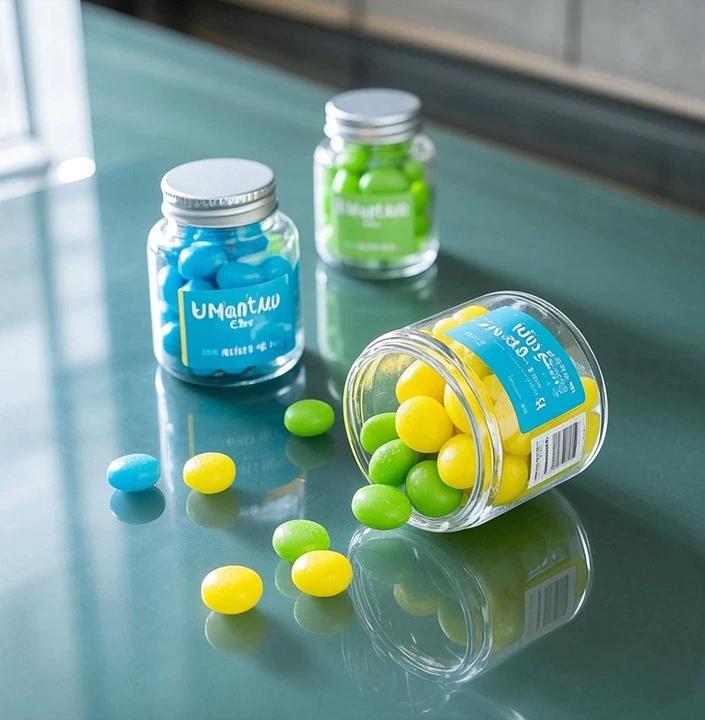
Gummies are no longer the cute add-on at the edge of the supplement shelf — they are now one of the fastest-growing dosage forms in the global market. For brands planning a gummy line, the single biggest differentiator you can build in 2026 is a genuinely vegan-friendly formula. Here is what overseas buyers need to …

Gummies are no longer the cute add-on at the edge of the supplement shelf — they are now one of the fastest-growing dosage forms in the global market. For brands planning a gummy line, the single biggest differentiator you can build in 2026 is a genuinely vegan-friendly formula. Here is what overseas buyers need to know before commissioning a gummy OEM project.
Why Gummies Keep Winning
Consumer research from multiple supplement markets tells the same story: gummies win on adherence. People take them because they taste good, they are easy to swallow, and they feel more like a treat than a chore. That matters enormously for products people are supposed to take daily — multivitamins, immunity blends, collagen, sleep support, and beauty-from-within.
The downside for brands is that the default gummy is built on gelatin, an animal-derived gelling agent made from collagen. That single ingredient shuts out a fast-growing segment: vegans, vegetarians, and the much larger group of mainstream consumers who simply prefer plant-based products when the price and quality are comparable.
The Gelatin Problem and the Plant-Based Fix
Traditional gummies rely on gelatin for their characteristic chew. It is cheap, reliable, and gives a springy bite that most consumers recognize. But it fails on three fronts: it is animal-derived, it is not acceptable to vegan buyers, and it is restricted in some religious and cultural markets.
Plant-based alternatives have matured considerably. The main options are:
Pectin. Derived from fruit, most often citrus peel and apple. It produces a softer, slightly shorter chew than gelatin and is the most common vegan gummy base. High-methoxyl pectin sets with acid and sugar, so formulation is more sensitive to pH.
Starch-based systems. Modified starches such as tapioca or corn starch can produce a firm, clean-label chew. Some are marketed as “starchless” hybrids blended with pectin.
Agar and carrageenan. Seaweed-derived gelling agents that give a firmer, more brittle bite. Often blended with other hydrocolloids rather than used alone.
Pectin–starch hybrids. Increasingly the workhorse of vegan gummies, combining the best texture of each at a controllable cost.
The good news: a well-formulated pectin gummy is not a compromise today. It can match gelatin products on texture, taste, and shelf life when the recipe is engineered correctly.
Formulation Details That Decide Success
Vegan gummies live or die on formulation precision. A few details separate a smooth production run from a sticky, unstable mess:
- Sugar and glucose syrup ratio. Sugar provides body and sweetness; glucose syrup controls crystallization and chew. Pectin systems demand a narrower ratio band than gelatin systems.
- Acid balance. Citric, malic, and lactic acids deliver the sour top-note consumers love, but too much acid plus high water activity causes sweating, sticking, and flavor degradation. The pH must be tuned to the specific pectin type.
- Water activity (aw). This is the quiet killer of gummy stability. If aw rises, the product becomes sticky and prone to microbial issues. Target values must be verified per recipe, not assumed.
- Cooking and depositing temperature. Heat-sensitive actives must be added late in the process, after the base has cooled, to protect potency.
Protecting Heat-Sensitive Actives
Many of the most marketable gummy actives are heat-sensitive. Probiotics, certain vitamins (notably vitamin C and some B vitamins), omega-3, and many botanical extracts degrade when exposed to the temperatures used to cook a gummy base.
A capable OEM partner handles this in three ways: adding actives at the lowest viable temperature, using an overage to compensate for processing loss, and selecting actives in stabilized or encapsulated forms designed for gummy matrices. If your factory does not raise these points, it has not produced many sensitive-active gummies.
Coating, Taste, and Masking
Plant-based gummies often need more help masking off-notes from actives than gelatin gummies do. Sour coating, sugar-sanding, and acid blends all provide cover, but they interact with moisture and stability. A good formulator balances taste against water activity rather than chasing flavor alone.
For sugar-free and low-sugar lines, sugar alcohols such as maltitol, sorbitol, and erythritol can replace sugar — but they change texture, crystallinity, and laxative thresholds. These are not drop-in swaps, and buyers should ask for a route-of-taste panel, not just a spreadsheet.
Packaging Is Part of the Formula
Gummies are hygroscopic. They absorb moisture from the air, and a gummy that was perfect at the factory can turn sticky in a humid warehouse or on a retail shelf in a tropical market. Packaging therefore matters as much as the recipe:
- Use high moisture-barrier containers or films.
- Consider desiccant options where appropriate.
- Verify shelf life under accelerated conditions, not just at ambient temperature.
- Test shipping to the destination climate, not only the production site.
For export markets, child-resistant packaging and clear allergen statements may also be required. Vegan claims should be supported by ingredient documentation, not assumed from the absence of gelatin.
Regulatory and Labeling Notes for Vegan Gummies
In the US, a “vegan” claim is not a legally defined term, but it is enforceable as a truthful claim — you must be able to substantiate it through your ingredient sourcing, including colors, flavors, and processing aids. In the EU, similar rules apply, and animal-derived processing aids such as certain clarifying agents can undermine a vegan claim if overlooked.
If you are marketing to vegan consumers, audit the entire ingredient statement: gelling agents, glazes (shellac and beeswax are not vegan), colors such as carmine, and any release or polishing agents.
Sourcing and Capacity Questions to Ask
When vetting a gummy OEM factory, go beyond price per unit:
- Can they run pectin and hybrid systems, or only gelatin?
- What is the minimum order quantity for a custom recipe versus a stock formula?
- Do they have in-house depositing, curing, and coating lines, or do they outsource steps?
- How do they validate water activity and shelf life?
- Can they provide stability data for heat-sensitive actives in a gummy matrix?
- What certifications cover the plant — and do they extend to the vegan line?
Bottom Line
Vegan-friendly gummies are one of the clearest opportunities in the supplement space. The formulation is more demanding than gelatin, but the payoff is access to a large, loyal, and growing consumer base — and a product that stands out on shelf. Choose a manufacturing partner who treats the vegan base as a core competency, not an afterthought, and validate every claim with documentation.
Ready to develop a vegan gummy line? Contact our OEM/ODM team:
Wade@zuoningbio.com | +86 187 5469 6289 | www.zuoningbio.com