Every few weeks a brand sends us a "simple" softgel spec A tiny, elegant 0.3g capsule: 30mg of CoQ10, a drop of oil, a clean label. And every time, our filling line quietly says no. Not because we can't run it — but because it would leak, or worse, pass filling and weep in the …

Every few weeks a brand sends us a “simple” softgel spec
A tiny, elegant 0.3g capsule: 30mg of CoQ10, a drop of oil, a clean label. And every time, our filling line quietly says no. Not because we can’t run it — but because it would leak, or worse, pass filling and weep in the client’s warehouse three months later.
I run OEM/ODM at Dongying Zuoning Biotechnology: 8 GMP workshops, a daily capacity of 100 million capsules, and a softgel line built on bovine gelatin. Important caveat we never hide — our softgels are not vegetarian or vegan, and we will not let a client print “Vegan” on a bovine-gelatin shell. This post is about the one softgel rule that saves more failed launches than any label fix: the 0.7g minimum fill floor.
The failure you can’t see at 0.3g
A softgel is two ribbons of gelatin meeting around a measured shot of fill. The seam welds when the two halves are pressed together with enough content mass to seat the lock. When the fill drops below roughly 0.7g per piece, two things go wrong:
- The pocket can’t hold the shell halves with enough tension, so the seam cross-links poorly.
- Air gaps form at the weld, and over weeks of storage those micro-gaps become leakers — oily weeping, oxidation, and a returns wave the brand never budgeted for.
We learned the 0.7g balance point the hard way, on real jobs, and it is now a hard gate in our pre-production checklist. Below it, we don’t run softgels blindly — we rescue the formula first.
The rescue table we actually use
Before locking any softgel spec, we run the dose through this logic. Steal it:
| If your active + carrier per piece is… | And the active is… | Our move |
|---|---|---|
| < 0.7g | Oil-based, low dose (e.g., CoQ10 30–100mg) | Add food-grade carrier oil (MCT/soy) to reach 0.7g, or concentrate the actives |
| < 0.7g | Ultra-low-dose powder (e.g., S-Equol 10mg) | Don’t solo it in softgel — pair with a companion oil or move to hard capsule (HPMC option available) |
| > 0.7g but powder | Bulky powder (e.g., Alpha Lipoic Acid 300mg) | Suspend in oil or re-route to hard capsule / tablet; powder-in-softgel needs suspension tech |
| > 0.7g | Free-flowing oil (saw palmetto, fish oil) | Softgel is correct — this is what the form is for (see ProstaShield) |
| Vegan claim required | Any | Softgel is disqualified — use pectin gummy or HPMC hard capsule |
Three rescues from our line
Rescue 1 — CoQ10 100mg. A client wanted the smallest possible softgel. At 100mg CoQ10 plus a little oil we landed near 0.4g. We rejected the fill, then rebuilt it with a measured MCT carrier to hit the 0.7g floor and kept the capsule size down by using a higher-potency oil blend. Same dose, same bottle count, zero leakers in stability. Lesson: carrier oil is not “filler” — it’s what makes the seam honest.
Rescue 2 — S-Equol 10mg. This is one of our real hero SKUs, and 10mg is minuscule. A solo softgel would be a ~0.2g piece that fails the weld. We pair S-Equol with a companion oil system so the unit clears the floor, or — when the brand insists on a dry format — we route it to a hard capsule where 10mg sits comfortably with a flow agent. Either way, it never ships as a bare softgel.
Rescue 3 — Alpha Lipoic Acid 300mg. ALA is a powder, and 300mg is bulky. Clients sometimes ask for it in softgel “because it looks premium.” We push back: powder-in-softgel needs a suspension system, and the bulk can push you past comfortable shell limits or raise per-piece cost. For ALA we almost always recommend a hard capsule or tablet — cleaner, cheaper, and it still hits our 150,000-piece MOQ.
Softgel vs the other three forms (with the real numbers)
When a dose is small or a claim is vegan, the answer is often “not a softgel.” Quick decision grid with our actual MOQs:
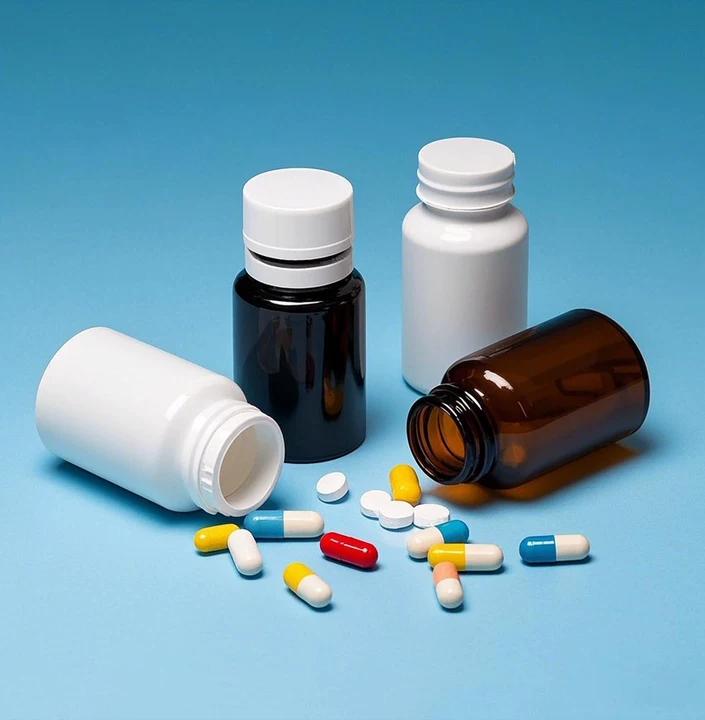
- Hard capsule — MOQ 150,000. Gelatin standard; HPMC vegetable shell available on request. Best for powders, low-to-mid doses, vegetarian claims.
- Softgel — MOQ 200,000. Bovine gelatin, oil-based fills only, 0.7g+ floor. Never vegetarian/vegan. Best for fish oil, CoQ10, saw palmetto, vitamin D/K oils.
- Tablet — MOQ 150,000. Compact, cheap, high-dose friendly. Vegan status depends on formula, not the form.
- Gummy — MOQ 200,000. Pectin base, can be labeled Vegan. Our BEAUTY BLOSSOM hair-skin-nails gummy and collagen gummy run on pectin, not gelatin.
Note the asymmetry: a brand that needs a vegan claim loses the softgel entirely and lands in gummy or HPMC hard capsule — usually at a higher per-bottle cost and a different MOQ.
The 6-point softgel pre-flight check we run on every order
- Does active + carrier reach ≥0.7g per piece? (If no, trigger a rescue.)
- Is the active oil-based or a suspendable powder?
- Is a vegetarian/vegan claim needed? (If yes, softgel is out.)
- Is the 200,000 MOQ acceptable for the launch batch?
- Is the oil stable at fill temperature and across the shelf life?
- Do we have a per-batch COA and seal-integrity test in the release plan?
If a client skips steps 1 and 3, that is where 90% of softgel disappointments come from.
Why this protects your margin
A too-small softgel isn’t just a quality risk — it’s a cost trap. Under-fill means more shells per kilogram of active, more labor per bottle, and a stability failure that eats the entire margin on a 20,000-bottle run. Setting the 0.7g floor up front is the cheapest insurance in the whole project.
Bottom line
Softgels are the right call for oils — fish oil, CoQ10, saw palmetto (our ProstaShield runs both a hard capsule and a softgel). They are the wrong call for tiny dry doses, powders that won’t suspend, or any brand that needs the word “Vegan” on the label. Send us the dose, and we’ll tell you in one email whether it clears 0.7g or needs a rescue.
Want us to size your formula against the floor? Email Wade@zuoningbio.com | +86 187 5469 6289 | www.zuoningbio.com